Did you know that you must cycle your fish tank before adding fish? Let’s look at the 3 different fish tank cycle methods as well as the role of each one.
- Understanding the Aquarium Nitrogen Cycle
- Mechanical Filtration: The First Line of Defence
- Chemical Filtration: Removing the Invisible Nasties
- Biological Filtration: The Heart of Your Aquarium
- Strategies for Establishing and Maintaining a Healthy Biological Filter
- Combining Filtration Methods for Optimal Results
- Troubleshooting Common Filtration Issues
- Conclusion
- Frequently Asked Questions
Understanding the Aquarium Nitrogen Cycle
What is the Nitrogen Cycle?
The nitrogen cycle is a natural process that turns harmful ammonia into less harmful substances. This process is important for your tank’s water quality, and it includes four steps:
- Fish waste, uneaten food, and decaying plants produces ammonia (NH₃), which is toxic to fish.
- Beneficial bacteria called “Nitrosomonas” changes ammonia into nitrites (NO₂).
- Another type of bacteria “Nitrobacter” then converts nitrites into nitrates (NO₃), which are less toxic to fish.
- Lastly, plants absorb and utilise nitrates, though it can also be removed with water changes.
Why Is It Important for a Healthy Aquarium?
Without the nitrogen cycle, ammonia and nitrites can build up in the tank, which is toxic to your fish. Proper filtration helps support the nitrogen cycle by creating an environment where beneficial bacteria can thrive. Let’s look at the three different types of filtration.
Mechanical Filtration: The First Line of Defence
Mechanical filtration is the physical removal of debris and undissolved matter from the water. Think of it as the first line of defence in keeping your tank clean.
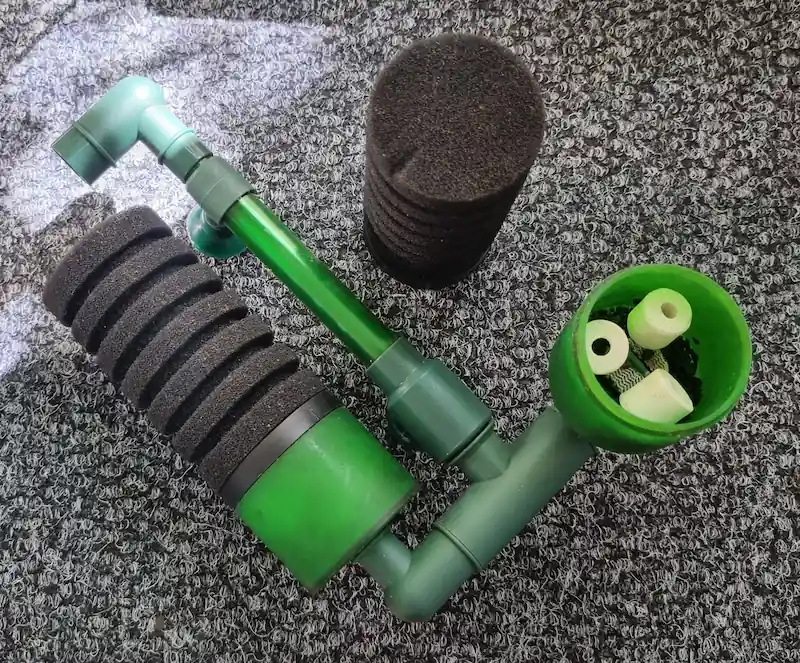
Common Types of Mechanical Filters
- Cartridge Filters: Replaceable cartridges that trap debris while allowing water flow.
- Floss Filters: Mesh material that captures small particles and can be used in various filter types.
- Sponge Filters: Great for smaller tanks or breeding setups, providing both mechanical and biological filtration.
Tips for Mechanical Filters
- Regularly rinse or replace filter media.
- Clean pre-filters or sponge filters to prevent clogging.
- Rinse filter media in fish tank water during water changes.
Chemical Filtration: Removing the Invisible Nasties
Chemical filtration isn’t always required for a healthy fish tank, but it can be very effective in certain situations. Use it to remove odours, tannins, and toxins, for correcting water quality issues, and maintaining clarity. It basically removes everything mechanical filtration can’t.
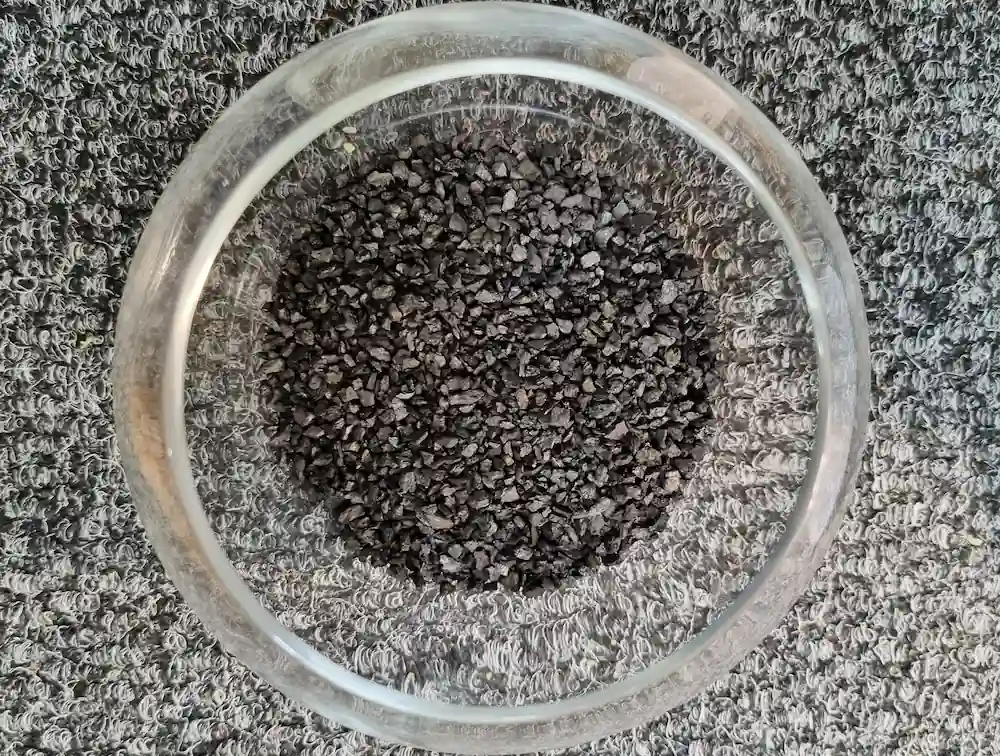
Types of Chemical Filtration Media
- Activated Carbon: Absorbs chemicals, toxins, tannins, and odours, improving water clarity.
- Granular Ferric Oxide (GFO): Removes phosphate and silicate.
- Purigen: A synthetic polymer media that absorbs organic waste and can also remove tannins.
- Zeolite/Ammonia Stones: Great for removing ammonia.
Tips for Incorporating Chemical Filtration into Your Setup
- Use it sparingly and only when needed.
- Chemical filtration gets less effective after a certain time period, so it’s recommended to follow manufacturer guidelines for replacement intervals.
- Keep in mind that a well-planted aquarium doesn’t really need chemical filtration, depending on the purpose.
Biological Filtration: The Heart of Your Aquarium
Biological filtration is crucial for establishing a healthy aquarium and has many benefits. It relies on beneficial bacteria to break down harmful compounds like ammonia and nitrites.
How Beneficial Bacteria Work
These bacteria colonise surfaces in your tank, primarily within your filter media, converting toxic substances into less harmful nitrates that can be managed through water changes.
Types of Biological Filter Media
- Bio-Balls: Excellent for high-flow systems and maintaining steady water quality.
- Ceramic Rings: Provide a large surface area for bacteria to grow and helps to protect against ammonia and nitrates.
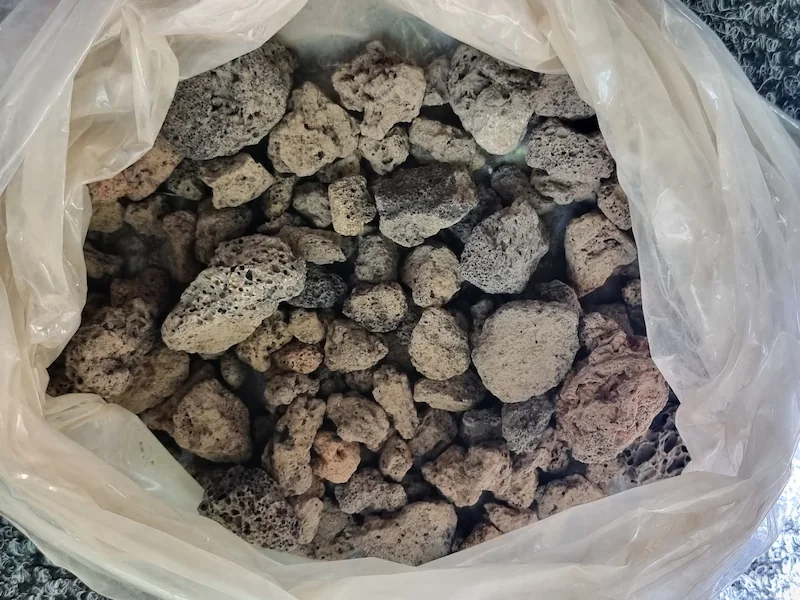
- Lava Rock: Natural material that offers a porous surface for beneficial bacteria.
Strategies for Establishing and Maintaining a Healthy Biological Filter
- Allow your tank to cycle properly before adding fish.
- Avoid over-cleaning filter media, as this can disrupt beneficial bacteria. It’s best to clean in fish tank water from water changes, NOT tap water.
Combining Filtration Methods for Optimal Results
Why Using All Three Types of Filtration is Beneficial
Utilising mechanical, chemical, and biological filtration creates a comprehensive filtration system that addresses all potential issues in your tank.
Examples of Combined Filter Systems
- Canister Filters: Often include compartments for all three types.
- Hang-On-Back (HOB) Filters: Can be outfitted with multiple types of media.
How to Balance Different Filtration Types Based on Your Tank’s Needs
Consider your tank size, fish load, and plant density to determine the best combination of filtration methods.
Troubleshooting Common Filtration Issues
Signs of Inadequate Filtration
- Cloudy water
- High levels of ammonia or nitrite
- Algae blooms
How to Address Common Problems
- Check filter media and replace or clean as needed.
- Increase water changes to help dilute toxins.
When to Upgrade or Change Your Filtration System
If you frequently experience issues or have added more fish, it might be time to consider upgrading your filtration system.
Conclusion
Understanding and utilising different filtration methods is essential for maintaining a healthy and balanced aquarium. By combining mechanical, chemical, and biological filtration, you can create an environment where your fish thrive. If you’d like to know more about fishkeeping basics, read our previous post.
Frequently Asked Questions
How often should I clean my filter?
Generally, clean your filter every 2–4 weeks, but it may vary based on tank conditions. When you notice very slow output flow, it is definitely time!
Can I over-filter my aquarium?
Yes, over-filtering can stress your fish. Make sure your filter flow rate is appropriate for your tank size.
Do I need all three types of filtration for a small tank?
While not mandatory, it does help a lot. Incorporating multiple filtration methods can enhance water quality, even in smaller tanks.
What’s the best filtration method for a planted tank?
A combination of biological filtration and gentle mechanical filtration is usually best, as it allows for a stable environment for both plants and fish.